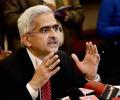
Reserve Bank Governor Shaktikanta Das on Monday said despite the latest headwinds arising from the Jackson Hole summit leading to extreme volatility, our banking system and financial markets are strong enough to withstand such pressures. Taking the markets by surprise, US Fed chair Jerome Powell had told the annual Jackson Hole summit of central bankers and economists last week that he would have to keep raising federal fund rates to tame inflation, which remains the biggest challenge to the world's largest economy. He also warned of the pains that such monetary policy actions would create on growth and jobs.

The Reserve Bank of India on Wednesday expectedly left interest rates unchanged and maintained an accommodative stance as the economy faces a renewed threat to growth due to the resurgence of coronavirus cases.

JSW Steel was the biggest gainer on the Sensex chart, rising 2.68 per cent, followed by Tata Motors, Mahindra & Mahindra, Tata Steel, Titan, ITC, Tech Mahindra, NTPC, Reliance Industries and Larsen & Toubro. In contrast, Bajaj Finance, Maruti, ICICI Bank, Power Grid, Asian Paints and Axis Bank were major laggards.

The Reserve Bank of India (RBI) on Friday hiked repo rate by 50 basis points to 5.90 per cent in order to control the rising inflation, keeping in line with the aggressive policies of central banks and the volatile markets prevalent across economies. RBI Governor Shaktikanta Das announced the rate hike today. In the meeting of the Monetary Policy Committee (MPC) that started on Wednesday, five of the members of the MPC voted to hike the key lending rate, repo rate, by 50-basis points (bps).

India's services sector remained in contraction territory for the third straight month in July, as business activity, new orders and employment declined further largely due to the COVID-19 pandemic and local restrictions, a monthly survey said on Wednesday. The seasonally adjusted India Services Business Activity Index rose from 41.2 in June to 45.4 in July, but was stuck in the red due to subdued demand conditions amid the COVID-19 crisis. In Purchasing Managers' Index (PMI) parlance, a print above 50 means expansion, while a score below 50 denotes contraction.

Policy rates have been reduced substantially in 2015.

Most banks are yet to pass on the benefits to the consumers.

India's headline retail inflation is expected to moderate further in the months to come, as low wholesale inflation will transmit to consumer prices, the Ministry of Finance said in its latest monthly economic review (MER) on Monday. "Inflationary pressures eased in February, with slight moderation in Consumer Price Index (CPI) inflation and Wholesale Price Index (WPI) inflation softening to a 25-month low. "With WPI inflation easing, its transmission to CPI inflation is soon expected," the MER for February said.

Chief Minister Arvind Kejriwal was 'party to the criminal conspiracy' of the formulation and implementation of the Delhi Excise Policy since the beginning, the Central Bureau of Investigation (CBI) has alleged in its latest supplementary charge sheet in the case.

In the backdrop of an over four-decade high inflation, the US Federal Open Market Committee has raised its key policy interest rate by 75 basis points to 2.25-2.50 per cent, anticipating that the increase in the interest rates will be "appropriate". Hiking interest rates typically cool demand in the economy, thereby putting a brake on the inflation rate. The US Federal Reserve in its June meeting too raised the interest rate by 75 basis points, which was the steepest hike since 1994.

Business houses expect rate cut in next RBI policy.

Global trends, macroeconomic data, and the outcome of the US Fed policy meeting are the major factors that will drive the movement in the domestic equity markets this week, analysts said. "In the upcoming data-centric week, the focus will be on crucial releases, including inflation data from India and the US. "Indian inflation is expected to rise, while US inflation will remain steady.

China's GDP jumped a record 18.3 per cent in the first quarter of 2021, riding on strong domestic and foreign demand and aided by recovery from a low base in early 2020 when Covid-19 stalled the world's second-largest economy, according to statistics released on Friday.

Industrial growth slowed to 3.6 per cent in February, 2011, compared to 15.1 per cent expansion in the year-ago period, dragged down by poor performance of manufacturing and mining sectors.
The Monetary Policy Committee (MPC) may go for a hike of up to 0.25 per cent in the reverse repo rate at which the RBI absorbs excess liquidity and leave the repo rate at which it lends, to narrow the policy rate corridor, a British brokerage said on Thursday. "Growth concerns amid spread of the Omicron variant and relatively benign inflation out-turns provide the RBI with enough room to maintain its growth-supportive monetary policies," analysts at Barclays said, ahead of the resolution announcement next week. The RBI will hike the reverse repo rate by 0.20-0.25 per cent, given its liquidity management actions, it said.

The narrative on China is changing post the recent stimulus measures, and it will be hard for global investors to ignore the Chinese markets.

Although there is headroom for further monetary policy action, at this juncture it is important to keep our arsenal dry and use it judiciously: RBI's Das.

Reserve Bank will hold its first bi-monthly monetary policy review for 2016-17 on Tuesday.

India's services sector lost momentum in July as demand was curtailed by competitive pressures, elevated inflation and unfavourable weather, a monthly survey said on Wednesday. The seasonally adjusted S&P Global India Services PMI Business Activity Index fell from 59.2 in June to 55.5 in July, pointing to the slowest rate of growth in four months. For the 12th straight month, the services sector witnessed an expansion in output. In Purchasing Managers' Index (PMI) parlance, a print above 50 means expansion while a score below 50 denotes contraction.

Retail inflation dropped to 6.77 per cent in October from 7.41 per cent in the preceding month, mainly due to easing prices in the food basket, though it remained above Reserve Bank's comfort level for the 10th month in a row, according to the government data released on Monday. The Consumer Price Index (CPI) based retail inflation has remained above the 6 per cent target since January this year.

HCL Technologies was the biggest gainer in the Sensex pack, rising 5.58 per cent, followed by Tata Consultancy Services and Infosys, State Bank of India, Tech Mahindra, Tata Steel, NTPC and Wipro. In contrast, Nestle, Bharti Airtel, Maruti and ITC were among the laggards.
.jpg)
Food and fuel inflation in India have remained high for several years, the paper said, adding to durably reduce the current high inflation, the monetary policy stance needs to remain tight for a considerable length of time.

'There are lots of low hanging fruits and often no real impediment to plucking them.'

The wholesale price-based inflation eased to 15.18 per cent in June on lower prices of manufactured and fuel items, even though food articles remained costly. The Wholesale Price Index-based inflation was at a record high of 15.88 per cent last month and 12.07 per cent in June last year. The WPI inflation in June has bucked the three-month rising trend but remained in double-digit for the 15th consecutive month beginning April last year.

Investors have become poorer by over Rs 10.36 lakh crore in the last four trading sessions as the domestic equity benchmarks extended their losses amid weak global trends. The Sensex and Nifty closed in the red for the fourth straight session on Friday amid continued selling by foreign institutional investors. The BSE Sensex ended 427.44 points or 0.72 per cent lower at 59,037.18.

Among major Sensex movers, ITC rose the most by 1.70 per cent, Wipro by 1.43 per cent, Tech Mahindra by 1.36 per cent and Nestle India by 1.27 per cent. Other gainers included HCL Tech, Asian Paints and Reliance. On the other hand, ICICI Bank, NTPC, UltraTech Cement and Tata Steel traded with a loss of up to 0.82 per cent.

The Reserve Bank of India in its annual monetary policy predicts an annual inflation number every year which is not a mandate, as there is no inflation target set by the government.

The third-quarter monetary policy review is keenly watched by the industry as well as the market because the central bank has not lowered the key interest rate (repo rate) since March on concerns of inflation.

Mortgage lender HDFC Ltd on Friday hiked its lending rate by 50 basis points hours after the Reserve Bank raised the benchmark interest rate to tame inflation. The move would increase EMIs for housing loans by the firm. "HDFC increases its Retail Prime Lending Rate (RPLR) on Housing loans, on which its Adjustable Rate Home Loans (ARHL) are benchmarked, by 50 basis points, with effect from October 1, 2022," the country's biggest housing finance company said in a statement.

International Monetary Fund (IMF) chief economist Gita Gopinath has made a strong case for regulating cryptocurrencies, saying it will always be a challenge to ban them as they operate from offshore exchanges. Gopinath also suggested a global policy and co-ordinated action for regulating cryptocurrencies. "I think cryptocurrencies are a particular challenge for emerging markets. "It seems to be more attractive to adopt cryptocurrencies and assets in emerging economies than in advanced economies," she said while addressing an event organised by the National Council of Applied Economic Research (NCAER) on Wednesday.

Investors' wealth soared by Rs 10.58 lakh crore in three days of the market rally, where the BSE benchmark jumped over 2 per cent, and hit an all-time high on Monday. Extending its winning momentum to the third day running, the 30-share BSE Sensex jumped 363.20 points or 0.49 per cent to settle at 74,014.55. During the day, it zoomed 603.27 points or 0.81 per cent to hit its record high of 74,254.62.

This is the fifth straight cut in rates by the Reserve Bank of India in as much policy reviews in 2019, and takes the total quantum of reductions to 1.35 per cent.

'Urjit Patel's appointment is a right decision and in the interest of the country.'

Tactical investors should have an investment horizon of around six months to one year, long-term investors should stick around for 10 years or more.

The committee set up under Urjit Patel to revise the policy framework needs to re-examine the Reserve Bank's approach to monetary stability.

The government is confident of meeting the fiscal deficit target of 5.9 per cent of gross domestic product (GDP) and the nominal GDP target of 10.5 per cent despite pressure in the initial months of FY24, Economic Affairs secretary Ajay Seth told Business Standard. Normally the initial months of any financial year see proportionally a higher fiscal deficit because the expenditure is evenly paced while revenue picks up in the later months, he said. "This year the proportional fiscal deficit so far is much closer to the target than in most other years.
There are respected names arguing both for and against this recommendation of the Urjit Patel committee.

Benefitting from the economic rebound, banks are expected to report a healthy bottom-line and asset quality profile in the quarter ended March 2023 (Q4FY23). The net profit of listed commercial banks is projected to grow by an average 43.6 per cent year-on-year (YoY) in Q4FY23 amid better net interest margins (NIMs) and declining credit costs. This is based on a combined assessment of analyst estimates for 17 banks on Bloomberg database.

Consumer price-based inflation jumped to 6.95 per cent in March, mainly on account of costlier food items, according to government data released on Tuesday. The Consumer Price Index (CPI) based inflation was 6.07 per cent in February.

Top laggards in the Sensex pack included Kotak Bank, ICICI Bank, HDFC Bank, Tata Motors, L&T, SBI, Tata Steel and Axis Bank, falling up to 3.46 per cent.
